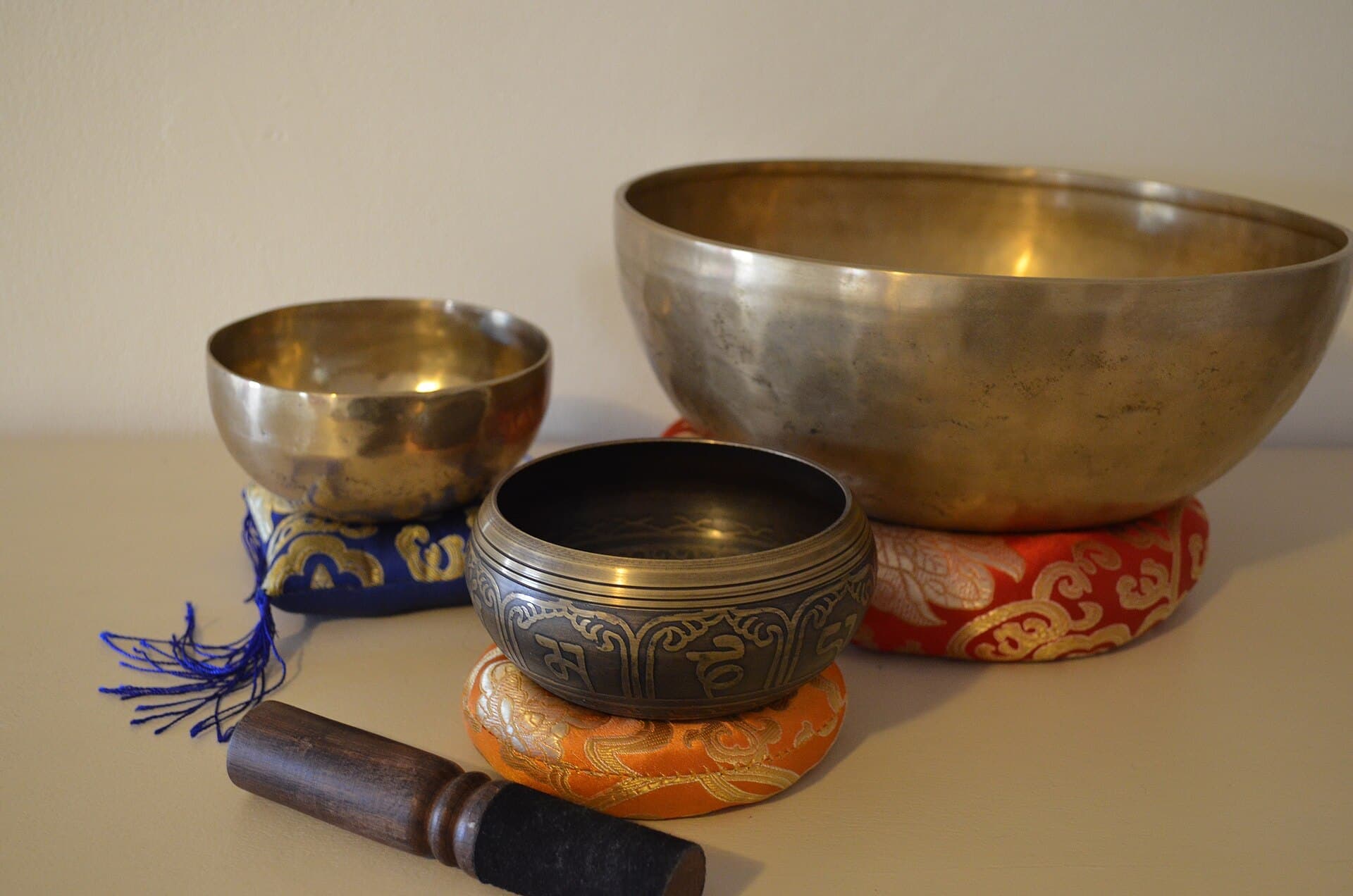
A Himalayan instrument
Singing bowls are strongly associated with Nepal and the wider Himalayan region, where they are still hand-made and played today. Their exact origins are debated, and GSHA’s resources aim to separate documented history from later interpretation.
How they are made
Bowls are hand-hammered or cast from metal alloys, and vary in size, thickness and shape. Hand-hammered bowls carry the marks of the maker and often produce a more complex set of overtones.
How they sound
A bowl can be struck for a clear, ringing tone, or “sung” by circling the rim with a mallet to build a sustained sound. The mallet’s material, the pressure used and the bowl’s shape all change the tone and its overtones.
Playing and care
Place bowls on a stable surface or cushion, keep volume comfortable for listeners, and never place a bowl on someone without their clear consent. Clean bowls with a soft dry cloth and store them where they will not knock together.
This guide is educational. Sound healing supports relaxation and wellbeing and does not replace diagnosis or treatment by qualified health professionals.